
After spending some time in Mumbai, I felt the need for a short break from the city and a different type of vacation as well. That is why I went to Pench safari, as it offered me closeness to the forest and wildlife safari as well. My plan included a flight from Mumbai to Nagpur, and then moving to Pench, staying at Pench Jungle Camp, and having a Gypsy safari in the evening through Turia Gate.
I arrived in Nagpur around 9:30 in the morning and reached Pench by cab, which was arranged for me through my resort. After I reached my resort, I had lunch and prepared myself for the safari. There was nothing particular that I wanted to see.
Mumbai To Nagpur: Starting My Pench Trip
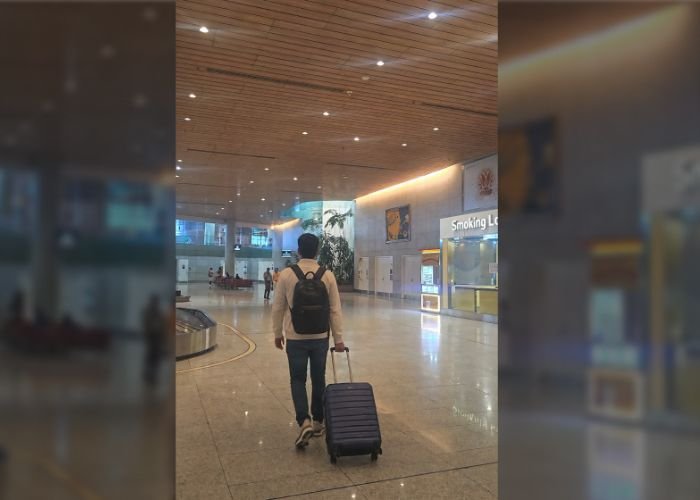
My visit to Pench began from Mumbai, and I had to take a flight in the early morning to reach my destination. The plane brought me to Dr. Babasaheb Ambedkar International Airport, Nagpur, at about 9:30 in the morning.
A private cab service was already arranged by the resort, hence no trouble regarding my travel after landing. The driver was waiting for me at the airport. As soon as I placed my luggage inside the cab, I started my journey towards Pench through the roads.
The journey was approximately 90 kilometers long, and it took me about two hours and fifteen minutes. My journey started in the city of Nagpur, which was crowded with people. However, after some time, when the route changed, everything went smoothly for me. We joined NH-44, and the surroundings slowly became less urban.
The difference in the surroundings pleased me. There were fewer buildings and more open areas. The driver drove comfortably during the journey and also gave me some basic facts about the way and the places through which we were moving.
With every passing minute, I felt more enthusiastic about reaching the resort and doing the safari. I reached the Pench Jungle Camp around 12:00 noon. My road journey went smoothly, and I even had time left for having lunch and resting before heading to Turia Gate.
My Stay And First Lunch At Pench Jungle Camp
After arriving at the Pench Jungle Camp, the check-in process was quick and systematic. The staff greeted me with a local herbal drink and assisted me in getting my luggage settled. After finishing the check-in formalities, I was escorted to my cottage.
The place was properly set up in a manner that suited the trip into the wildlife. During the check-in, the personnel provided me with some information regarding the resort and safety tips. I found this very helpful since being near a forest requires more caution compared to staying at any other city hotel.
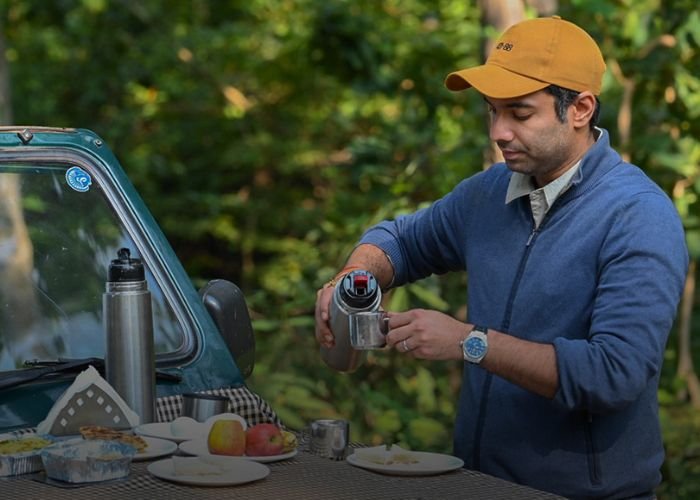
Having settled down in my cottage, I headed straight to the dining hall for lunch. The lunch included several Indian cuisines with some local flavor. Some hot phulkas, jeera aloo, dal, local mutton curry, and buttermilk comprised the lunch menu for me.
It is to be noted that the mutton curry tasted very good at lunchtime owing to my tough morning ride. The buttermilk was also quite delicious in the heat. It was not my intention to laze around for long since there was going to be an afternoon safari. After having my lunch, I went back to my cottage to get ready for Turia Gate.
Reaching Turia Gate For Evening Safari
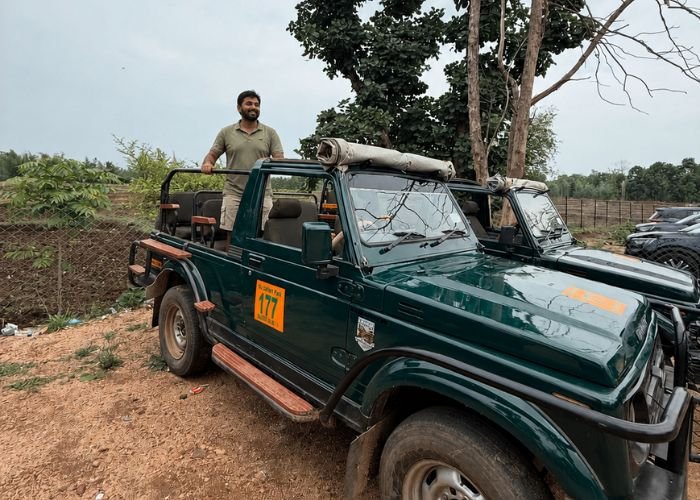
At around 3:00 PM, I reached Turia Gate for the evening safari. Before entering the reserve, forest department officials checked the required permit. After the formalities, I got into the open 4×4 Gypsy to begin my wildlife safari in Pench.
I was with a local driver and a forest guide. Having a local guide was useful because he knew the forest routes and understood signs such as animal movements and alarm calls.
The afternoon was warm, but there was a comfortable breeze. As soon as the Gypsy entered the forest, I saw teak trees, dry leaves, grassy areas, and uneven forest roads.
The driver kept the Gypsy at a controlled speed, especially in areas where animals could be nearby. The guide often looked toward both sides of the track instead of only watching the road.
I soon realized that we had to stay alert throughout the safari because animal sightings could happen at any time. We had to watch and listen carefully. A sound, movement in the grass, or an alarm call could change our direction.
That was what started happening as we went deeper into the reserve.
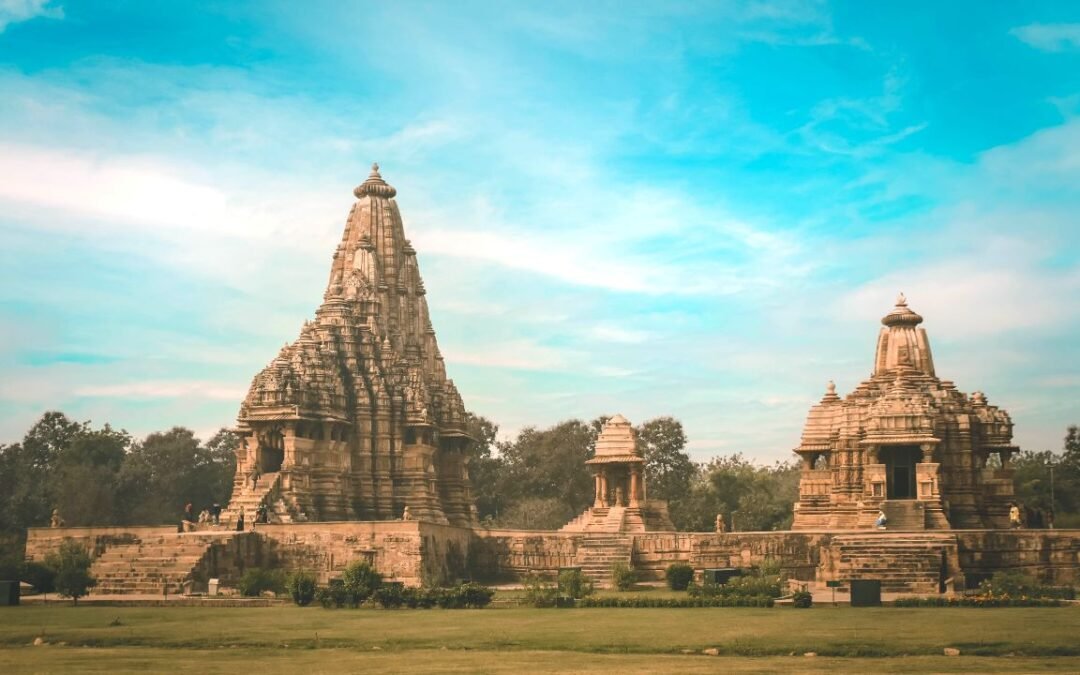
YOU MAY ALSO LIKE: Temples of Khajuraho – A Complete Travel Guide to Visit Them
Tracking Wildlife Before Finding The Tiger
One of the first things I noticed was how carefully the guide and driver listened to animal sounds. We heard alarm calls from spotted deer and langurs at different points. Our guide would ask the driver to slow down or stop so they could understand where the sound was coming from.
Our first major sighting was a herd of Indian gaurs near a dried riverbed. They were grazing in the area, and we stopped the Gypsy so we could watch them properly. Seeing such large animals from close range was impressive.
A little later, we saw sambar deer. They stayed alert and kept looking toward the forest. This caught the guide’s attention. We also saw langurs moving through the trees and calling from above.
Birds added another part to the safari. I saw Indian rollers, crested serpent eagles, and kingfishers during the drive. Most of these sightings were brief, so I had to stay alert and watch carefully.
The tracking process interested me the most. Whenever we heard an alarm call, the driver reduced the speed. Our guide looked toward the direction of the sound and tried to understand what could have caused it. Sometimes we waited for a few minutes, while at other times we continued on the track.
There were several moments when I expected an animal to appear, but nothing happened. Still, every stop made me pay more attention to the forest.
Then we reached an area near a shaded waterhole, and the situation changed quickly.
The Tiger Sighting Near The Waterhole
We were driving near the waterhole when we suddenly heard stronger alarm calls. The guide immediately became alert. The driver slowed down and then stopped the Gypsy.
The engine was switched off, and everyone became quiet. I looked toward the bushes and tried to see any movement. At first, I could not see anything. The bushes were thick, and it was difficult to know whether the movement was normal or caused by an animal.
We waited quietly.
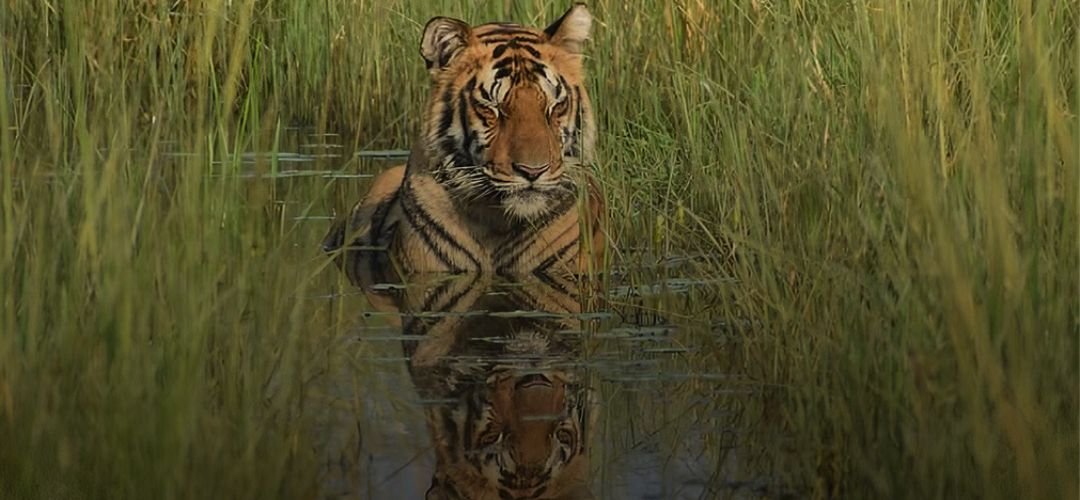
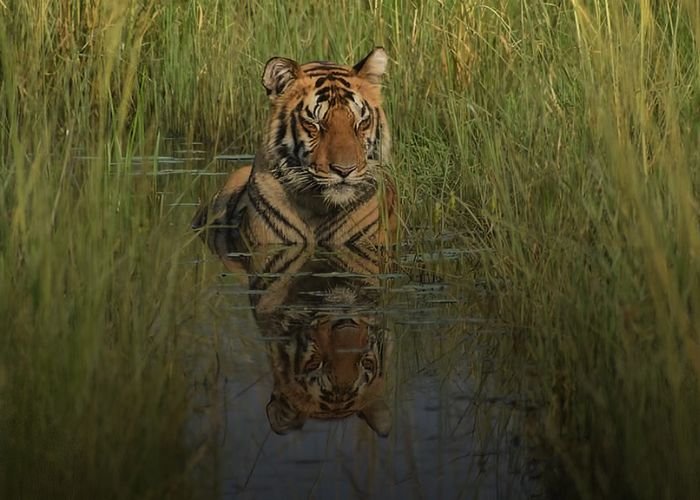
After a few minutes, I noticed movement in the vegetation. Then a sub-adult Bengal tiger came out onto the dirt track.
It stopped and looked toward our Gypsy. I could see its yellow eyes from where I was sitting. I tried to take photographs while also watching the tiger directly. It was difficult to decide whether to use my camera or simply watch.
The tiger did not stay on the track for long. After looking toward the Gypsy, it moved away and disappeared into the vegetation and bamboo.
The sighting lasted only a short time, but it became the main memory of my safari. I had already enjoyed seeing the gaur, sambar, langurs and birds, but seeing a Bengal tiger in its natural habitat was a different experience.
After the tiger moved away, the driver waited for a little while before starting the Gypsy again. We continued along the route and kept watching the forest. I checked the photographs on my camera and phone to see whether I had captured the sighting properly.
The rest of the safari continued without another tiger sighting. I was fine with that because the forest experience was already very good. The tiger had given us a memorable part of the afternoon.
We eventually returned toward Turia Gate and reached the resort at around 6:30 PM.
Bonfire, Dinner And My Evening At Resort
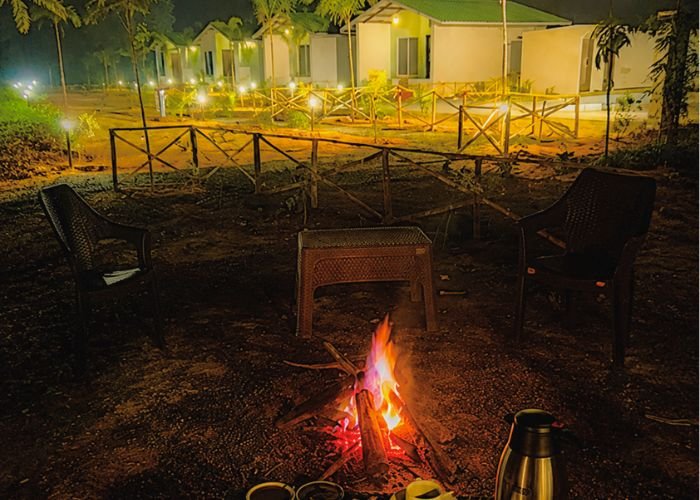
On my return to Pench Jungle Camp, I gave myself some leisure time. The safari had taken quite a few hours, so it felt good to take a seat and see through my photos. Afterwards, I spent some time by the fire where other wildlife lovers stayed at the resort, talking about the animals that we saw and our experiences during the safari.
Tiger spotting was obviously one of the important conversations. Dinner was organized outdoors. It comprised local cuisine and tandoor food. For dessert, I had warm gulab jamun.
The evening was peaceful and cozy. I did not have any other activity planned for me that evening. All I did was just relax in the resort, look at my safari pictures, and reflect on what I had seen that day.
For me, the tiger was the most exciting part; however, other smaller things from the safari were also significant to me.
Early Morning Walk And Return To Nagpur
The following day began early for me as well since I woke up at approximately 5:30 AM. I had not made reservations for any additional safaris, and I chose to go on a nature walk around the resort premises. It was a much calmer morning than the day before, as one could hear various bird songs and the cooler climate ensured that walking would be pleasant.
This was a simple walk, although it allowed me to have a closer look at the environment without having to be in the safari car. After this walk, I went back to the resort and had breakfast there. I packed my luggage and checked out at around 10:00 AM.
The same cab was arranged for my return journey to Nagpur. The route seemed familiar from the day before, but the experience differed from what it would have been because now I was heading away from Pench after having done my safari there. It was a good journey, and we arrived at Nagpur airport by 12:30 pm.
The timing of my afternoon flight to Mumbai was just perfect. Though the visit was brief, it included all that I had expected from it – comfortable accommodation, local cuisine, Gypsy safari to Turia Gate, wildlife and bird sightings, and a tiger sighting.
But most of all, I understood during this tour that the Pench safari is not merely about seeing a tiger. Listening to the guide, following his reactions, pausing for animal observation, and noticing what happens in the forest are some aspects that add value to the experience. For me, the highlight of the trip was my evening safari at Turia Gate and my chance to see the tiger.
Author : Abhishek Sinha is a wildlife travel enthusiast with a keen interest in jungle safaris and nature-based travel across India. He enjoys exploring national parks, sharing practical travel experiences, and helping readers better understand wildlife destinations and safari experiences.



0 Comments